



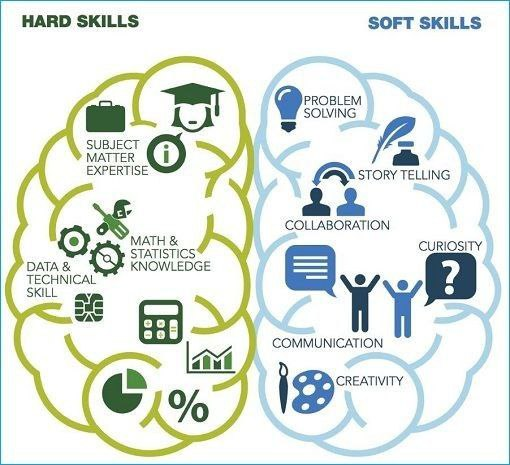
Hard / Soft skills


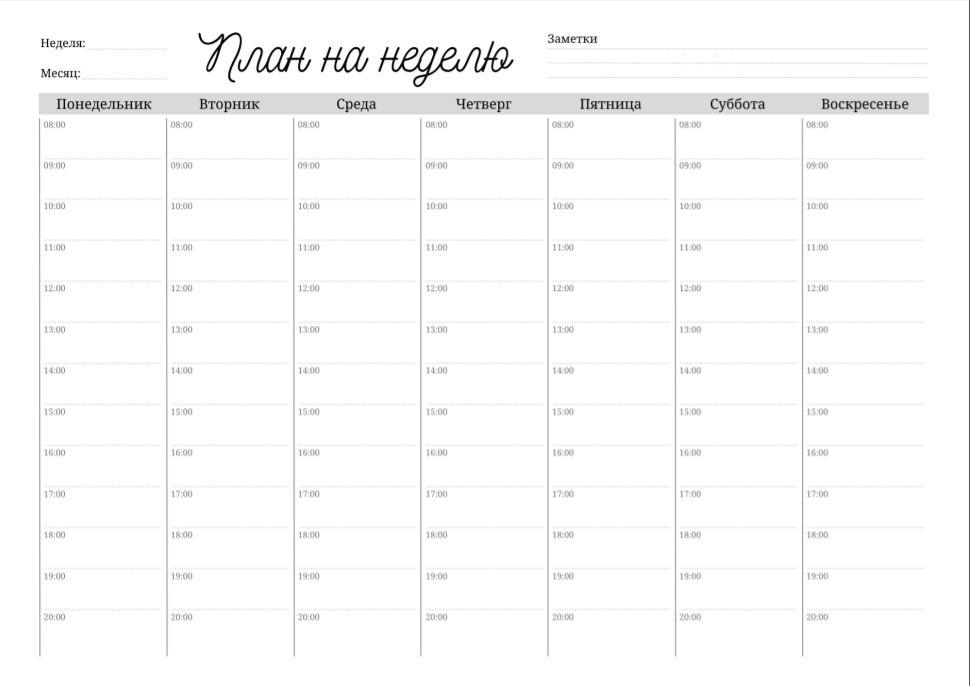
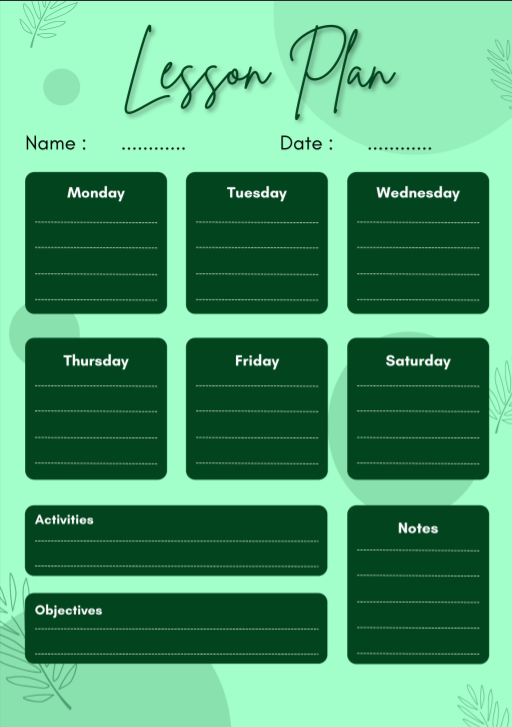
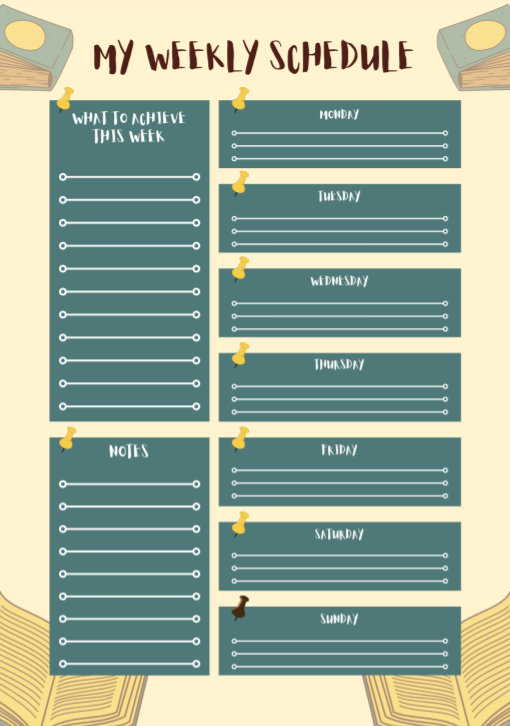
This page is designed to better optimize the student's day.
We all constantly complain that time passes too quickly. The day has too few hours and we are not able to do everything we would like. Study and work do not leave us time for personal growth, hobbies, healthy lifestyle and communication. How can we help ourselves?
With love, KBTU!
What do you need to pay attention to during your time allocation ?
Useful applications
Instagram Facebook or Instagram is something that we constantly log in to while we are working or studying, then things will inevitably drag on. In the fight against this habit, various applications will help us, which will limit the time we use to watch videos on YouTube or stay in social networks.
Breaks
In order not to "burn out", it is useful to take a break during work. It is useful to walk around the room/office/auditorium and drink some water. If possible, it is worth allocating about 1 hour for a lunch break.
Calendar
In addition to the list of tasks for the day, it also helps many to record various goals and tasks in the calendar for weeks and even months ahead. To do this, we can, of course, use Google calendar or a similar program on a smartphone.
Sleep and wake-up schedule
It is useful to go to bed and wake up on a certain schedule. This will not only promote order, greater organization, but also improve sleep. When we get enough sleep, we have more energy to work and create.
Useful applications
Instagram Facebook or Instagram is something that we constantly log in to while we are working or studying, then things will inevitably drag on. In the fight against this habit, various applications will help us, which will limit the time we use to watch videos on YouTube or stay in social networks.
Breaks
In order not to "burn out", it is useful to take a break during work. It is useful to walk around the room/office/auditorium and drink some water. If possible, it is worth allocating about 1 hour for a lunch break.
Calendar
In addition to the list of tasks for the day, it also helps many to record various goals and tasks in the calendar for weeks and even months ahead. To do this, we can, of course, use Google calendar or a similar program on a smartphone.
Sleep and wake-up schedule
It is useful to go to bed and wake up on a certain schedule. This will not only promote order, greater organization, but also improve sleep. When we get enough sleep, we have more energy to work and create.
For your convenience, we also provide you with printed versions of TO DO sheets
4 Best Time Management Methods:
1. The Pareto
Principle Pareto states that a small proportion of the causes, efforts and investments are responsible for a large proportion of the results. The Pareto principle in the field of time management can be formulated as follows: approximately 20% of the effort and time is enough to get 80% of the result.
Principle Pareto states that a small proportion of the causes, efforts and investments are responsible for a large proportion of the results. The Pareto principle in the field of time management can be formulated as follows: approximately 20% of the effort and time is enough to get 80% of the result.

How exactly to determine which efforts are enough to spend to get a good result? Imagine that you are looking for answers to your questions in a book. According to the principle under consideration, you will find 80% of the information you need in 20% of the text volume. If you know exactly what interests you, you can quickly scroll through the book and carefully read only individual pages. This way you will save 80% of your time.
2. The Eisenhower Matrix
Probably, this is the most well-known concept of time management today, which allows you to allocate priorities. This technique, the creation of which is attributed to the American General Dwight Eisenhower, allows you to sort cases both by their urgency and by their importance. Everyone understands that only a limited number of tasks can be completed in one period of time. Sometimes, without prejudice to the work of only one. And every time we have to decide WHICH ONE? American President Dwight Eisenhower used to sort his affairs by several important categories when planning his affairs.
Probably, this is the most well-known concept of time management today, which allows you to allocate priorities. This technique, the creation of which is attributed to the American General Dwight Eisenhower, allows you to sort cases both by their urgency and by their importance. Everyone understands that only a limited number of tasks can be completed in one period of time. Sometimes, without prejudice to the work of only one. And every time we have to decide WHICH ONE? American President Dwight Eisenhower used to sort his affairs by several important categories when planning his affairs.
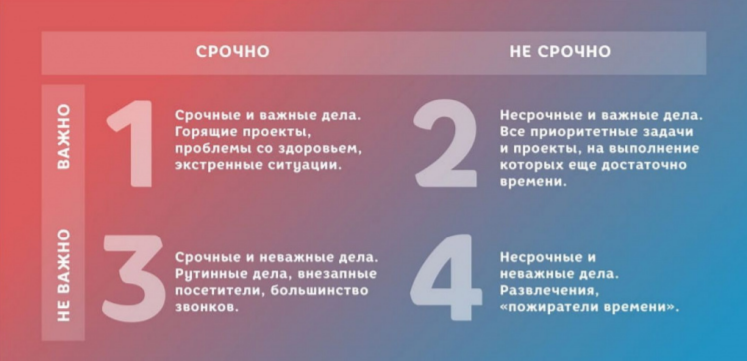
Type I: "important and urgent".
These are cases, the untimely execution of which will lead to significant damage to your studies.The affairs of this group must be carried out, period. Otherwise there will be serious problems.
Type II: "important, but not urgent."
These are things that are focused on the future: training, studying promising areas of business development, improving equipment, restoring health and efficiency. Things leading to your strategic goal.
Type III: "not important, but urgent."
Many of these things don't really do much good in life. We only do them because they fell on us.
Type IV: "not important and not urgent."
These are all kinds of ways to "kill time": alcohol abuse, "light reading", watching movies, etc. Often we resort to this when we do not have the strength to work productively.
These are cases, the untimely execution of which will lead to significant damage to your studies.The affairs of this group must be carried out, period. Otherwise there will be serious problems.
Type II: "important, but not urgent."
These are things that are focused on the future: training, studying promising areas of business development, improving equipment, restoring health and efficiency. Things leading to your strategic goal.
Type III: "not important, but urgent."
Many of these things don't really do much good in life. We only do them because they fell on us.
Type IV: "not important and not urgent."
These are all kinds of ways to "kill time": alcohol abuse, "light reading", watching movies, etc. Often we resort to this when we do not have the strength to work productively.
3. Intelligence maps or Mind maps
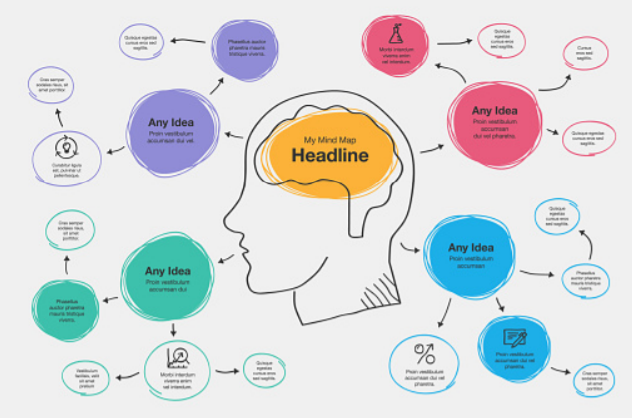
This is the development of Tony Buzen, a well–known writer, lecturer and consultant on intelligence, learning psychology and thinking problems.
Intelligence maps are a method that allows you to:
• effectively structure and process information;
• think using your creative and intellectual potential.
This is the development of Tony Buzen, a well–known writer, lecturer and consultant on intelligence, learning psychology and thinking problems.
Intelligence maps are a method that allows you to:
• effectively structure and process information;
• think using your creative and intellectual potential.
4. Eat the frog first
Transition from difficult to easy
You've probably heard the question: "How would you eat an elephant?" The answer, of course, is: "Piece by piece." And how would you eat your biggest and nastiest "frog"? In the same manner: you would break it down into specific step-by-step actions and start from the very first one. Start your working day with the most difficult task and complete it as fast as you can. You will be helped by the realization that you still have a lot to do, and the working day is limited. Doing the most difficult thing in the first place will give you a huge sense of satisfaction. Use this rule daily and you will see how much energy you get and how effectively your working day goes. Constantly postponing a problematic task to the end of the day, leads to the fact that you will still think about this task all day, and this will prevent you from focusing on other tasks! First eat the frog, and then start eating the elephant in parts!
Transition from difficult to easy
You've probably heard the question: "How would you eat an elephant?" The answer, of course, is: "Piece by piece." And how would you eat your biggest and nastiest "frog"? In the same manner: you would break it down into specific step-by-step actions and start from the very first one. Start your working day with the most difficult task and complete it as fast as you can. You will be helped by the realization that you still have a lot to do, and the working day is limited. Doing the most difficult thing in the first place will give you a huge sense of satisfaction. Use this rule daily and you will see how much energy you get and how effectively your working day goes. Constantly postponing a problematic task to the end of the day, leads to the fact that you will still think about this task all day, and this will prevent you from focusing on other tasks! First eat the frog, and then start eating the elephant in parts!

1.Trello - a free web application for managing projects in small groups. Trello allows you to work productively in closer cooperation. Trello is a whiteboard, lists and maps that allow you to organize everything and prioritize projects in a fun, flexible and easily-changeable form.
The best modern time management technologies:


2. Evernote - a web service and a set of software for creating and storing notes. A note can be a fragment of formatted text, an entire web page, a photo, an audio file, or a handwritten recording. Notes can also contain attachments with other types of files. Notes can be sorted by notebooks, labeled, edited and exported.
3. Keep your life in control with Wunderlist. Doing everyday tasks has become easier than ever. Whether you are planning a vacation, want to share a shopping list with a partner, or manage several projects at the same time, Wunderlist will help you, in which you can plan the fulfillment of both personal and professional tasks.

Recommended books to read:
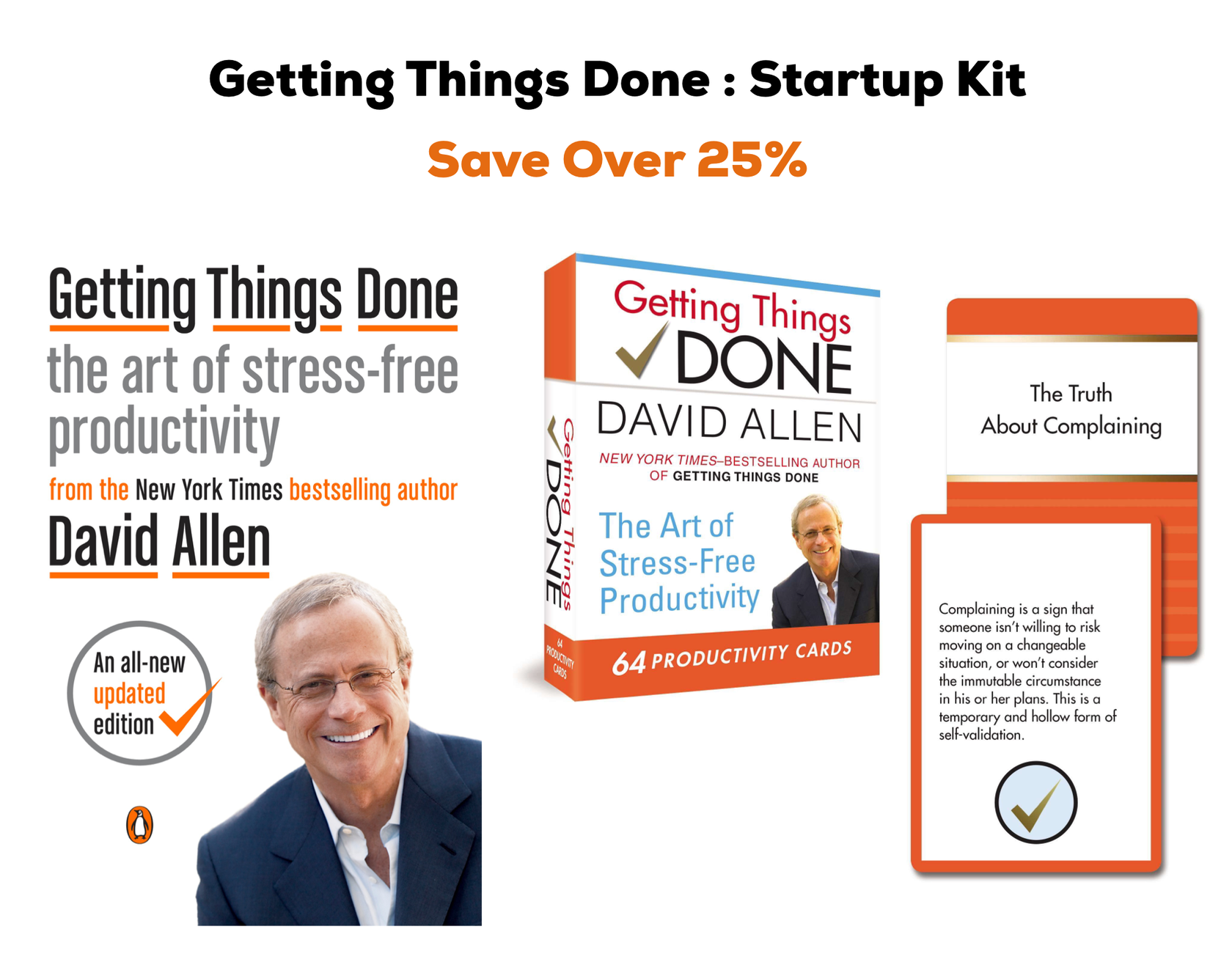
How to put things in order. The Art of Productivity without Stress, David Allen
With its help, the tangles of your problems will unravel much faster: you will gain clarity of consciousness and order of thoughts, learn to separate important things from secondary ones, set goals correctly and prioritize, finish what you started, and also have a full rest.
With its help, the tangles of your problems will unravel much faster: you will gain clarity of consciousness and order of thoughts, learn to separate important things from secondary ones, set goals correctly and prioritize, finish what you started, and also have a full rest.
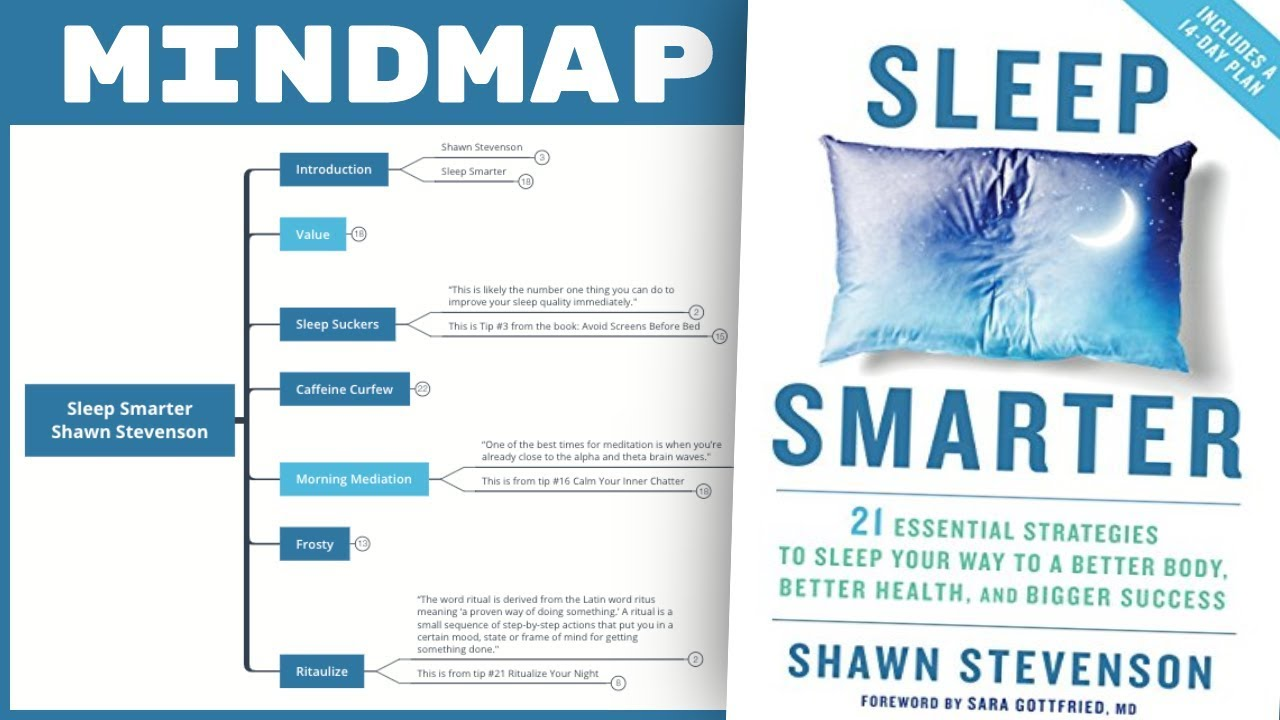
Healthy sleep, Shawn Stevenson
There are so many interesting things in life that require attention that we often devote almost all of our time to business. We want to solve everything as quickly as possible so much that sometimes we even refuse to sleep. And if a person has a lot to do, then he may decide that sacrificing sleep is quite normal to spend an evening with friends. But just how does this affect your well-being and life in general? In this book, Sean Stevenson talks about it. The reader will be able to understand how important it is to get a good night's sleep and why. The book will help you see the connection between different life events and sleep, and not just tell you that you need to sleep.
There are so many interesting things in life that require attention that we often devote almost all of our time to business. We want to solve everything as quickly as possible so much that sometimes we even refuse to sleep. And if a person has a lot to do, then he may decide that sacrificing sleep is quite normal to spend an evening with friends. But just how does this affect your well-being and life in general? In this book, Sean Stevenson talks about it. The reader will be able to understand how important it is to get a good night's sleep and why. The book will help you see the connection between different life events and sleep, and not just tell you that you need to sleep.

Maximum concentration. How to Maintain Efficiency in the Era of Clip Thinking, by Lucy Jo Palladino
The book will teach you to concentrate, cope with distractions and relieve stress associated with time pressure. What we do during the working day is sometimes hard to call work. After all, we check our mail a hundred times a day, randomly switch from one task to another, look into mobile applications, while managing to discuss the details of projects on the work phone. At the same time, we have a million tabs open in the browser with sites, tables, reports... Our brain works in a mode that the high-tech industry calls continuous partial attention. Our attention is torn into many small pieces, which form a continuous buzz in our head and do not allow us to concentrate.
The book will teach you to concentrate, cope with distractions and relieve stress associated with time pressure. What we do during the working day is sometimes hard to call work. After all, we check our mail a hundred times a day, randomly switch from one task to another, look into mobile applications, while managing to discuss the details of projects on the work phone. At the same time, we have a million tabs open in the browser with sites, tables, reports... Our brain works in a mode that the high-tech industry calls continuous partial attention. Our attention is torn into many small pieces, which form a continuous buzz in our head and do not allow us to concentrate.
"Don't do this. Time management for creative people". Donald Grew Up
Most of our ideas remain unrealized, and often we cannot fully realize our ideas and reveal our talents. Why? If you ask this question to a creative person, then, most likely, he will refer to the time. Donald Ros, a designer and creative entrepreneur, will tell you how, thanks to a unique method – a to–do list - to manage your time in creativity and in life in general. When you say "no" to one task or project, you free up more time for what is really important. The book consists of three parts: "Life", "Work" and "Projects", and everything is considered in it – from setting life goals to writing a letter of five sentences and minimizing the project.
Most of our ideas remain unrealized, and often we cannot fully realize our ideas and reveal our talents. Why? If you ask this question to a creative person, then, most likely, he will refer to the time. Donald Ros, a designer and creative entrepreneur, will tell you how, thanks to a unique method – a to–do list - to manage your time in creativity and in life in general. When you say "no" to one task or project, you free up more time for what is really important. The book consists of three parts: "Life", "Work" and "Projects", and everything is considered in it – from setting life goals to writing a letter of five sentences and minimizing the project.

Recommended apps for studying:

Xmind
A program for studying with which you can create electronic mind maps. The application helps to quickly take notes on lectures and organize the material, displaying it in the form of a diagram (branched tree), diagram, graph. For example, make a memo on tenses in English or create a plan for a term paper or a thesis.
A program for studying with which you can create electronic mind maps. The application helps to quickly take notes on lectures and organize the material, displaying it in the form of a diagram (branched tree), diagram, graph. For example, make a memo on tenses in English or create a plan for a term paper or a thesis.
Quizlet
The program has modules for studying the natural and social sciences, mathematics, culture and art, foreign languages. Here's what you can do in Quizlet:
* create memory cards;
* automatically generate exercises and tests;
* receive an individual study plan;
* use ready-made training modules;
* Complete the Quizlet Live tutorial
The program has modules for studying the natural and social sciences, mathematics, culture and art, foreign languages. Here's what you can do in Quizlet:
* create memory cards;
* automatically generate exercises and tests;
* receive an individual study plan;
* use ready-made training modules;
* Complete the Quizlet Live tutorial
LivePuzzle English
Learn English with Puzzle English and speak English like a native! The mobile application helps to develop listening comprehension of English, understand the rules, practice translation skills and replenish your vocabulary. In addition, the Puzzle English application has interactive games with which you can improve your level of English in a fun way.
Learn English with Puzzle English and speak English like a native! The mobile application helps to develop listening comprehension of English, understand the rules, practice translation skills and replenish your vocabulary. In addition, the Puzzle English application has interactive games with which you can improve your level of English in a fun way.
Coursera
A mobile client for the distance education service of the same name, cooperating with the world's leading universities. With a broad academic community, Coursera offers users over 3,900 courses ranging from the exact sciences and information technology to the social sciences, whether it's law, economics, and pedagogy. The duration of each course varies depending on its complexity and ranges from 4 weeks or more.
A mobile client for the distance education service of the same name, cooperating with the world's leading universities. With a broad academic community, Coursera offers users over 3,900 courses ranging from the exact sciences and information technology to the social sciences, whether it's law, economics, and pedagogy. The duration of each course varies depending on its complexity and ranges from 4 weeks or more.


Microsoft To Do
The top of the best applications for study cannot but include the well-known Microsoft development - the To Do checklist, which has become the prototype for many planners. It is extremely simple: the user creates lists with tasks (one line, one task) and marks them as they are completed. There is an alert system that is convenient to use for recurring events. For example, set reminders about the deadlines for passing tests, essays, or add a schedule of consultations before exams to the notification system.
The top of the best applications for study cannot but include the well-known Microsoft development - the To Do checklist, which has become the prototype for many planners. It is extremely simple: the user creates lists with tasks (one line, one task) and marks them as they are completed. There is an alert system that is convenient to use for recurring events. For example, set reminders about the deadlines for passing tests, essays, or add a schedule of consultations before exams to the notification system.
MYSCRIPT calculator
A calculator that recognizes handwriting itself replaces what is written with signs and solves the written examples. If you are not a fan of complex scientific calculators, and in general, everything turns out better and faster manually, the application will suit you.
A calculator that recognizes handwriting itself replaces what is written with signs and solves the written examples. If you are not a fan of complex scientific calculators, and in general, everything turns out better and faster manually, the application will suit you.


Plagiarism checker
An application for checking the uniqueness of a text using popular search engines such as Google, Yahoo, Babylon, Google Scholar and Google Books.
An application for checking the uniqueness of a text using popular search engines such as Google, Yahoo, Babylon, Google Scholar and Google Books.
Grammarly
The application is based on an online platform based on artificial intelligence to help communicate in English, helps to write in English more effectively and gives recommendations regarding the correctness, clarity, fascination and tone of the message.
The application is based on an online platform based on artificial intelligence to help communicate in English, helps to write in English more effectively and gives recommendations regarding the correctness, clarity, fascination and tone of the message.


Canva
A free graphic editor that is great for both beginners in design and experienced professionals. The service allows you to quickly and easily create posts for social networks, creative videos, presentations and other visual materials.
A free graphic editor that is great for both beginners in design and experienced professionals. The service allows you to quickly and easily create posts for social networks, creative videos, presentations and other visual materials.
8 films that inspire you to study.
1) The Man Who Knew Infinity 2015
The Man Who Knew Infinity is a British biographical drama based on the novel of the same name by Robert Kanigel. The film tells about the short life of Indian self-taught mathematician Srinivasa Ramanujan.
The Man Who Knew Infinity is a British biographical drama based on the novel of the same name by Robert Kanigel. The film tells about the short life of Indian self-taught mathematician Srinivasa Ramanujan.


2) Dead Poets Society, 1989
A cult film with an excellent cast (Robin Williams, Ethan Hawke, Robert Sean Leonard) based on an Academy Award-winning screenplay. The picture tells about a private school for boys, which has a new teacher of literature. He will help his students not only learn to express their opinion, but, first of all, respect themselves and gain confidence.
A cult film with an excellent cast (Robin Williams, Ethan Hawke, Robert Sean Leonard) based on an Academy Award-winning screenplay. The picture tells about a private school for boys, which has a new teacher of literature. He will help his students not only learn to express their opinion, but, first of all, respect themselves and gain confidence.
3) Detachment, 2011
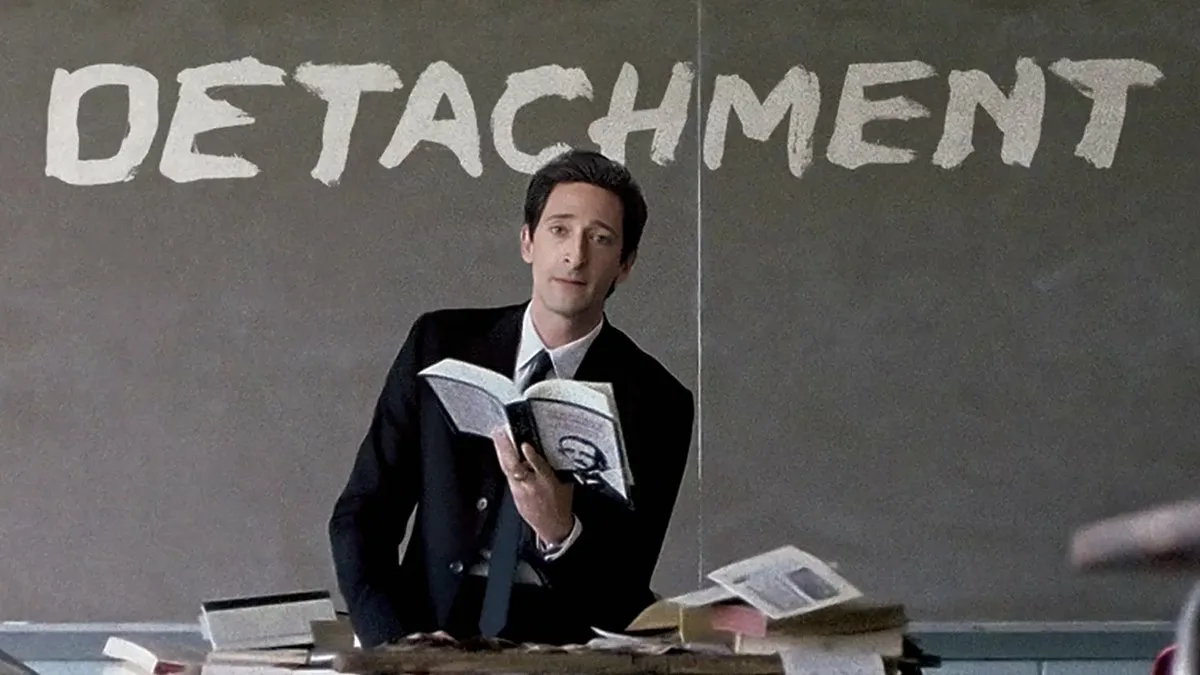
The director of the film shows a modern school: people come there not for knowledge, but to spend time aimlessly. Who needs these kids? To no one, not even their own parents, teachers try to make people out of them, but they only get spit in the face. And with such children, Henry Bart, a substitute teacher, will have to work.
The director of the film shows a modern school: people come there not for knowledge, but to spend time aimlessly. Who needs these kids? To no one, not even their own parents, teachers try to make people out of them, but they only get spit in the face. And with such children, Henry Bart, a substitute teacher, will have to work.

4) Triumph: The Ron Clark Story, 2006
After leaving the provincial town for New York, Ron Clark deliberately takes a job in the most difficult class of a regular high school in Harlem. His children are the dregs of society. At least that's what everyone around them thinks, the principal of the school, their parents, and they themselves. But Ron doesn't think so. If you missed not only the school, but also the charming Chandler from the Friends series, then this film is definitely for you.
After leaving the provincial town for New York, Ron Clark deliberately takes a job in the most difficult class of a regular high school in Harlem. His children are the dregs of society. At least that's what everyone around them thinks, the principal of the school, their parents, and they themselves. But Ron doesn't think so. If you missed not only the school, but also the charming Chandler from the Friends series, then this film is definitely for you.
5) Professor's favorite equation, 2006
But after this picture, the viewer will look at mathematics again. The story tells about a kind and generous professor who got into a car accident 10 years ago, after which events began to be retained in his memory for no longer than 80 minutes. Two people appear in his life: a housekeeper and her ten-year-old son Ruth. Over time, they begin to understand the beauty hidden in numbers, they are fascinated by the professor's love for mathematics, and gradually they begin to explore the fantastic world of numbers and equations.
But after this picture, the viewer will look at mathematics again. The story tells about a kind and generous professor who got into a car accident 10 years ago, after which events began to be retained in his memory for no longer than 80 minutes. Two people appear in his life: a housekeeper and her ten-year-old son Ruth. Over time, they begin to understand the beauty hidden in numbers, they are fascinated by the professor's love for mathematics, and gradually they begin to explore the fantastic world of numbers and equations.

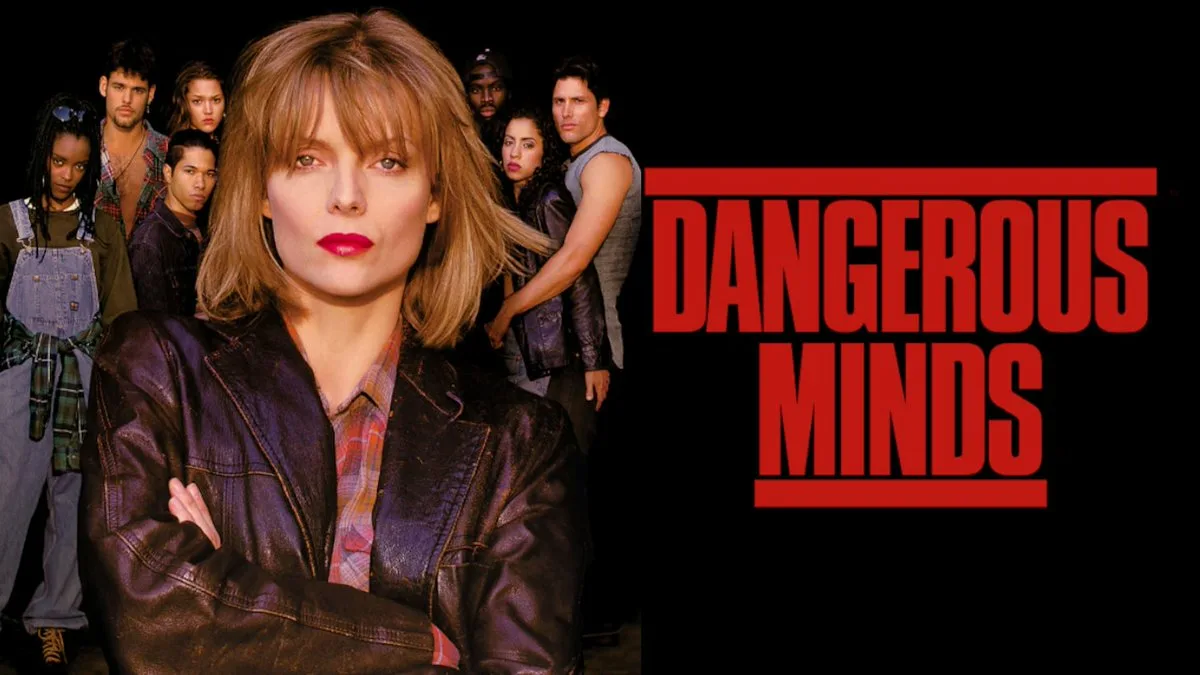
6) Dangerous Minds, 1995
Another film about raising difficult teenagers starring the charming Michelle Pfeiffer. Picture-screen version of the autobiographical book by Luanne Johnson. After serving in the Marine Corps, this "iron lady" came to work in a school for disadvantaged children, where her army service skills were definitely useful.
Another film about raising difficult teenagers starring the charming Michelle Pfeiffer. Picture-screen version of the autobiographical book by Luanne Johnson. After serving in the Marine Corps, this "iron lady" came to work in a school for disadvantaged children, where her army service skills were definitely useful.
7) Mona Lisa Smile, 2003
Katherine Ann Watson (played by Julia Roberts), a Berkeley graduate, takes a job teaching art history at Wellesley Women's College. It is ambitious and progressive, but patriarchal views prevail among the leadership and teaching staff of the college. With passionate enthusiasm, the new teacher throws himself into the fight for gender equality and has a huge impact on the students, forcing them to rethink the role of women in this world.
Katherine Ann Watson (played by Julia Roberts), a Berkeley graduate, takes a job teaching art history at Wellesley Women's College. It is ambitious and progressive, but patriarchal views prevail among the leadership and teaching staff of the college. With passionate enthusiasm, the new teacher throws himself into the fight for gender equality and has a huge impact on the students, forcing them to rethink the role of women in this world.

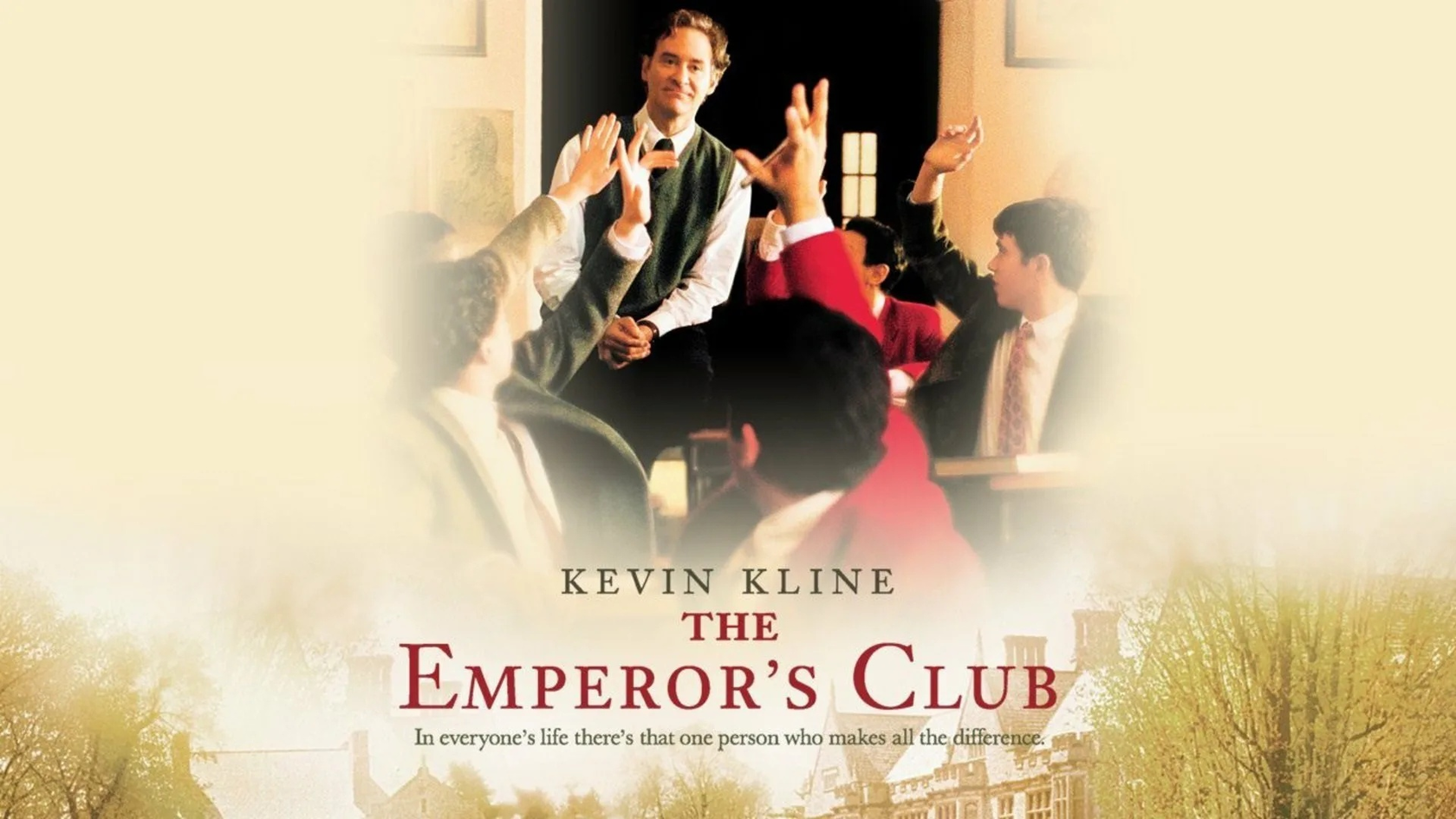
8) Emperor's Club, 2002
William Hundert, Kevin Klein's character, is a seemingly ordinary teacher who teaches the history of the ancient world in college and aims to raise real men out of young men. But one day, a new student Sedgwick Bell, the son of a senator, comes to Mr. Hundert's class, who does not recognize any authority and does not want to learn. Handert is trying to re-educate the arrogant youngster before it is too late, but he does not yet know what mistake he will make. They have to enter into a difficult battle, which will be completed only 25 years after the events highlighted in the film.
William Hundert, Kevin Klein's character, is a seemingly ordinary teacher who teaches the history of the ancient world in college and aims to raise real men out of young men. But one day, a new student Sedgwick Bell, the son of a senator, comes to Mr. Hundert's class, who does not recognize any authority and does not want to learn. Handert is trying to re-educate the arrogant youngster before it is too late, but he does not yet know what mistake he will make. They have to enter into a difficult battle, which will be completed only 25 years after the events highlighted in the film.
Here are links to motivational videos that we hope will be able to cheer you up and set you up for study!

Дополнительно
Быстрые ссылки
Контакты






To - Do page

Call-центр:
+7 (727) 357 42 42
Деканат ФИТ
+7 (727) 357 42 20
ОР
+7 (727) 357 42 81
+7 (727) 357 42 42
Деканат ФИТ
+7 (727) 357 42 20
ОР
+7 (727) 357 42 81
Made by 1st year students: Larionova Anastasiya, Rinatova Alina, Madenyetova Aliya , Bazargaliyeva Fatima , Maksymkyzy Zhanerke
